VALORANT Champions Shanghai Group Stage Day 7
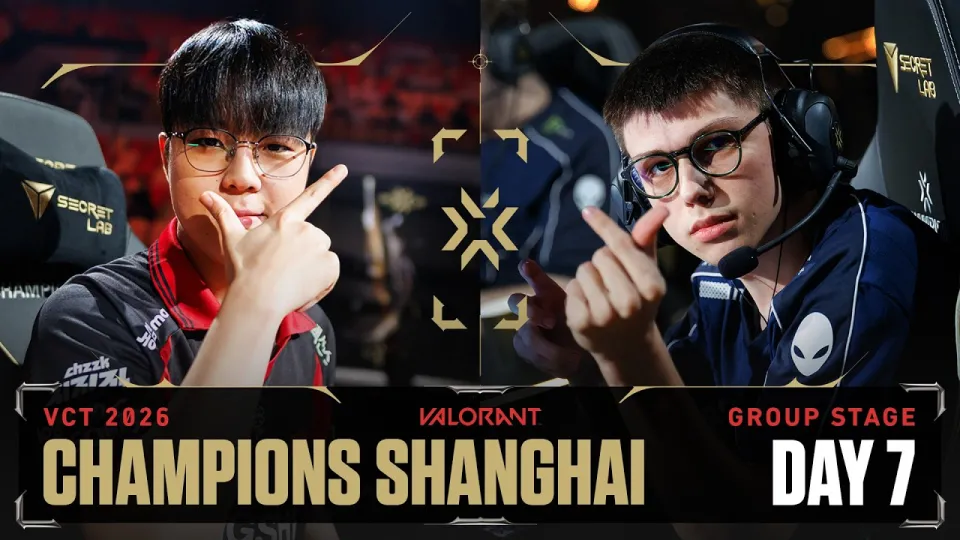
Video: VALORANT Champions Shanghai — Group Stage — Day 7
Need articles like this for your video? They help promote it on YouTube and Google — order them in the Telegram bot @sat_sit_bot. The bot writes and publishes the articles itself (with your YouTube video embedded) on popular topical websites (no ads). Your first 50 articles are free.
· based on the channel VALORANT Champions Tour
Key takeaways
- Champions Shanghai runs September 24 to October 18, 2026, with sixteen teams from Americas, CN, EMEA and Pacific.
- Day 7 is the seventh broadcast day of the group stage, streamed on the VALORANT Champions Tour channel.
- Two Masters events in 2026 produced two different champions, so Shanghai decides the year's biggest trophy.
- The Day 7 broadcast was repeatedly interrupted by technical pauses, a running theme in viewer comments.
- Chinese teams drew heavy criticism for losing eco rounds and 5v2 situations once set plays broke down.
VALORANT Champions Shanghai is the 2026 world championship, where sixteen teams from the Americas, CN, EMEA and Pacific fight for the year's biggest trophy between September 24 and October 18. Day 7 of the group stage, broadcast by the VALORANT Champions Tour, is the seventh competition day of that opening phase, and it decides which squads move closer to the playoff bracket and which ones leave Shanghai early. For schedules, brackets and live updates, the official esports account at VALORANT Esports on X is the fastest source.
What the VALORANT Champions Shanghai format means for Day 7
The group stage is the filter that turns sixteen invited teams into a playoff field, and every Day 7 map carries bracket consequences. Champions is the season finale of the VCT calendar, so the group stage at Shanghai is not a warm-up: teams arrive with points from Masters events and regional leagues, and a single lost series can flip seeding or end a run outright.
Key conditions of the event as presented in the broadcast description:
- Sixteen teams, split across four regions: Americas, CN, EMEA and Pacific.
- The event window runs from September 24 to October 18, 2026, with the group stage occupying the first block of that schedule.
- The winner is crowned the 2026 VALORANT World Champion.
- The broadcast is produced in English with closed captions, and the VOD keeps the full day rather than a highlights cut.
Because the group stage uses a compressed schedule, Day 7 sits near the point where teams can no longer hide behind one good map. Drafts get more conservative, pistol rounds matter more, and coaches start saving specific set plays for elimination matches.
The 2026 story arc behind the Shanghai group stage
The 2026 season is defined by a shift at the top, and Shanghai is where that shift gets settled. According to the event's own framing, two Masters events in 2026 produced two different champions, breaking the assumption that one roster would simply carry its regional form into the world final. New contenders have arrived, expectations have been broken, and the fearless generation of challengers is now competing for the biggest trophy of the year.
That context changes how Day 7 should be read. A favorite dropping a map in the group stage is no longer a shock; it is the pattern of the season. Teams that looked dominant in their home league have to prove that their utility usage and mid-round calling survive against unfamiliar regional styles, especially CN squads playing in front of a home crowd and Pacific teams built around fast tempo.
Tech pauses and broadcast rhythm on Day 7
The most visible problem of the Day 7 broadcast was downtime, and viewers noticed it immediately. Comments under the VOD describe an "endless series of tech pauses," and one of the most-liked posts is a spoiler-blocking timestamp list that its author warns may need editing because of a pause. When a broadcast day is interrupted repeatedly, the practical effects are real:
- Momentum breaks: a team that just won a clutch round can lose the thread during a five-minute stoppage.
- VOD navigation gets harder, since community timestamps drift out of sync with the actual map starts.
- Analysis suffers, because casters have to fill time without new information from the server.
For anyone watching the replay rather than the live stream, the safest approach is to use the official chapter markers on the VOD and treat community timestamp lists as approximate. Tournament organizers typically publish a pause explanation after the day ends, and the official channels listed in the broadcast description are where those statements appear.
Why Chinese teams drew criticism in the group stage
CN representatives arrived at Champions with home advantage and left Day 7 facing unusually direct criticism from the English-speaking audience. The sharpest comments focus on discipline rather than aim: losing rounds that should be unlosable, dropping eco rounds, and conceding 5v2 retakes. One widely liked comment argues that Chinese squads look lost once their prepared strategies stop working, showing little improvisation with utility.
A second, opposite thread of comments argues the opposite problem: that stronger teams from other regions missed the event entirely, so the CN slots were softer than they should be. Both complaints point at the same structural question about the 2026 format — how much a regional slot is worth when the field is capped at sixteen teams.
None of this erases individual moments. A clip flagged in the comments shows a Yoru clone briefly reading as a site anchor, the kind of split-second misread that decides a retake. Moments like that are why the full-day VOD is worth watching instead of a highlight reel: the mistakes and the recoveries sit next to each other.
Players and rosters worth tracking after Day 7
Individual form is the clearest signal the group stage produces, and Day 7 added to the case for several veterans. One comment thread simply nominates a veteran European player for president, which is the community's way of saying a single player is holding a struggling roster together. On the other side of the map, questions about specific players' decision-making — one comment asks bluntly what a certain player was doing — reflect how harshly group-stage errors get judged when the bracket is on the line.
What to watch in the remaining group matches:
- Which teams can win a map without their signature composition.
- Whether CN squads tighten eco and retake discipline after a public beating.
- How quickly playoff-bound teams start hiding set plays.
- Which individual players keep producing under pause-heavy, stop-start conditions.
Useful links for following VALORANT Champions Shanghai
All official channels for the event, exactly as listed by the broadcast:
- https://x.com/valorantesports — live updates, brackets and announcements
- https://www.facebook.com/ValorantEsports/
- https://www.instagram.com/valorantesports/
- https://www.tiktok.com/@valorantesports
- https://www.twitch.tv/valorant — live match streams
What Day 7 tells us about the Shanghai playoffs
Day 7 confirmed that the 2026 season has no untouchable favorite, and that group-stage discipline separates teams more than raw firepower. The tech pauses were a production problem, not a competitive one, but the CN results and the eco-round collapses are genuine signals about how the playoff bracket may break. Teams that fix their retakes and utility usage in the next few days will look very different in elimination matches. This breakdown is based on the Day 7 broadcast published by the VALORANT Champions Tour channel, and the full VOD remains the best way to judge the maps yourself. Follow VALORANT Esports on X for the confirmed playoff schedule and results as the group stage closes.
Questions & answers
What is VALORANT Champions Shanghai?
It is the 2026 VALORANT world championship, running from September 24 to October 18. Sixteen teams from the Americas, CN, EMEA and Pacific compete, and the winner becomes the 2026 VALORANT World Champion.
What happened on Day 7 of the group stage?
Day 7 was the seventh broadcast day of the group stage, streamed by the VALORANT Champions Tour. It featured group matches with bracket implications and was repeatedly interrupted by technical pauses that viewers complained about in the comments.
Why were there so many tech pauses during the broadcast?
Viewers flagged an unusually high number of stoppages, enough that community timestamp lists needed editing. The VOD itself does not explain the cause, so the official esports channels are the place to check for an organizer statement.
Why are Chinese teams criticized after the group stage?
Comments point to lost eco rounds, failed 5v2 retakes and a lack of improvisation when prepared strategies break down. Others argue the deeper issue is that stronger teams from other regions did not qualify for the sixteen-team field.
Source: VALORANT Champions Shanghai — Group Stage — Day 7 · Markdown version